
What Is the Step-by-Step Guide to Becoming a UKIQ Partner?

For educational institutions and training academies, partnering with an international qualification body can be an important step towards strengthening the value and credibility of their skill development programmes.
However, institutions often have questions about how the partnership process works. What information needs to be submitted? Which courses are eligible? What documents are required? How long does the approval process take? And what happens after the application is accepted?
The process of becoming a UK International Qualifications (UKIQ) partner is designed to provide a structured pathway for institutions that wish to have their eligible skill development courses accredited through UKIQ.
From the initial communication with a UKIQ representative to the submission of institutional details, course information and syllabi, followed by committee review and accreditation, each stage has a specific purpose.
Here is a step-by-step guide to the process.
Step 1: Connect With a UKIQ Representative
The first step towards becoming a UKIQ partner is connecting with a representative of UK International Qualifications.
A UKIQ representative will guide the institution through the initial process and provide the necessary information regarding the application and accreditation requirements.
This initial interaction is an opportunity for the institution to understand the partnership process, identify the courses it wishes to submit, and prepare the required information before moving forward with the formal application.
Once the institution is ready to proceed, the next stage is the application.
Step 2: Complete the UKIQ Partnership Application
After connecting with the UKIQ representative, the institution will be required to complete the relevant application.
The application provides UKIQ with essential information about the institution and the courses it wishes to have accredited.
The institution will generally need to provide details such as:
- Institutional information
- Contact and registration details
- Details of the courses being offered
- Course titles
- Course types
- Course duration
- Information about the programmes submitted for accreditation
It is important that the information provided in the application is accurate and complete, as these details will form part of the review process.
Step 3: Identify Eligible Skill Development Courses
One of the most important parts of the application is the course list.
The courses submitted for this process should fall under the category of skill development courses.
For a course to be considered within this category, the course duration should not exceed 12 months.
Therefore, institutions should carefully review their programmes before submitting the application and identify which courses qualify as skill development courses.
Course Duration Matters
The duration of the programme is an important consideration during the application process.
Courses intended for submission should have a duration of 12 months or less. Courses extending beyond 12 months should not be presented as skill development courses under this process.
This makes it important for institutions to clearly identify the appropriate courses before preparing their final course list.
Step 4: Present the Course Titles Correctly
The course list submitted with the application should clearly indicate the level or type of qualification being offered.
The naming format should make it immediately clear whether the programme is a certificate course or a diploma course.
For example:
Certificate Course
Certificate in [Course Name]
Diploma Course
Diploma in [Course Name]
The same structure should be followed consistently throughout the course list.
Clear and consistent course titles help avoid confusion during the review process and ensure that the information submitted to UKIQ accurately represents the programmes offered by the institution.
Step 5: Submit the Complete Course Syllabus
Once the institution has prepared its course list, the next important requirement is the submission of the syllabus.
The syllabus should correspond to the courses that have been mentioned in the application for accreditation.
The institution should provide the complete syllabus of the courses it wishes to have accredited.
The syllabus can be submitted in a suitable document format, such as:
- DOC/DOCX
The document should contain the complete course structure and relevant academic or training information necessary for the review.
Why Is the Syllabus Important?
The course title alone does not provide enough information to understand the actual learning programme.
The syllabus gives the reviewing team a clearer understanding of what students will learn, how the course is structured, and what the institution intends to deliver through the programme.
Therefore, institutions should ensure that the syllabus submitted is complete and corresponds accurately with the courses listed in the application.
Step 6: Application and Syllabus Are Submitted for Review
Once the application and relevant course syllabi have been prepared, the documents are submitted to the UKIQ Selection Committee for review.
At this stage, the institution’s application and course information undergo a review process.
The committee considers the information provided by the institution and conducts the necessary checks before making a decision regarding the application.
This stage is important because it ensures that applications are reviewed before accreditation is granted.
Step 7: Background and Cross-Checking Process
Following submission, the Selection Committee carries out the required background checks and cross-checking of the information provided by the institution.
The purpose of this stage is to review the institutional information and submitted course details before the application is accepted.
According to the process, the review and processing by the Selection Committee takes approximately two days.
During this period, the submitted information is examined before a decision is made.
Institutions should therefore ensure that all information and documents submitted during the earlier stages are accurate, complete, and consistent.
Step 8: Application Approval and Accreditation Invoice
Once the Selection Committee accepts the application, the institution moves to the next stage of the accreditation process.
Following acceptance, UKIQ will issue the relevant invoice for payment to the institution.
The institution can then complete the required payment according to the invoice provided.
This stage marks the transition from the application and review process to the formal accreditation stage.
Step 9: Complete the Accreditation Payment
After receiving the invoice, the institution completes the required accreditation payment.
Once the payment has been successfully made, UKIQ proceeds with the accreditation process.
It is therefore important for institutions to complete the payment promptly after receiving the invoice, particularly if they are working towards a specific course launch or academic intake.
Step 10: Receive Your UKIQ Accreditation Certificate
After the payment has been completed and the accreditation process has been initiated, the institution will receive its UKIQ accreditation certificate.
The expected processing period for receiving the accreditation certificate is approximately five to seven working days after payment.
The certificate will be sent to the institution’s registered email address.
This provides the institution with formal documentation of its accreditation and allows it to proceed with the next stages of its partnership with UKIQ.
What Happens After Accreditation?
Receiving the accreditation certificate is not the end of the partnership process.
Once an institution becomes a UKIQ partner, it also receives access to a dedicated institutional portal through the official UKIQ website.
This portal is an important part of the partnership because it provides the institution with a dedicated space to manage its accredited courses and student-related requirements.
Step 11: Receive Your Dedicated UKIQ Institution Portal
A dedicated portal will be created for the institution through the UKIQ website.
The portal is specific to the individual institution and is associated with the institution’s name.
This means that the academy or educational institution has its own dedicated area within the UKIQ system.
The portal provides a more structured way for the institution to manage the courses it has submitted and the students associated with those courses.
Step 12: Access Your Approved Course List
Once the institution’s dedicated portal has been provided, the courses submitted for accreditation will be added to the portal.
The institution can then view its accredited course list through its dedicated portal.
This gives the institution a centralised place to manage the programmes that have been submitted through the UKIQ accreditation process.
It also makes the process more convenient for institutions that offer multiple skill development programmes.
Step 13: Apply for Student Certifications Through the Portal
Once the institution’s courses are available in the dedicated portal, the institution can use the portal to apply for student certifications for the relevant courses.
This can be done according to the institution’s requirements and student intake.
Instead of handling every certification request through a separate process, the dedicated portal provides an organised mechanism through which institutions can manage certification requirements for students enrolled in their approved courses.
This becomes particularly useful for academies that regularly enrol students across multiple programmes.
Step 14: Receive Student Certificates
Once the certification process has been completed and the certificates are ready, they will be shared with the institution through its registered email address.
The expected timeline for receiving the certificates is approximately five to seven working days.
This allows the institution to receive the relevant student certificates and provide them to learners after completion of their respective courses and certification requirements.
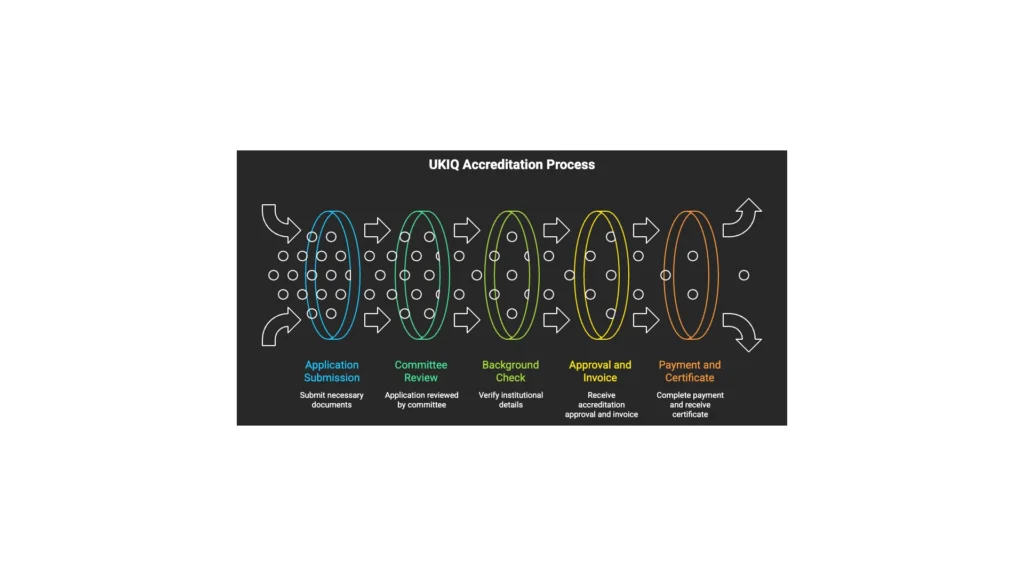
The Complete UKIQ Partnership Process at a Glance
For an institution, the entire journey can be understood through a simple sequence:
What Should Institutions Keep Ready Before Applying?
Preparing the necessary information in advance can make the process smoother.
Before beginning the application, an institution should have the following information and documents ready:
Institutional Information
Details about the academy or educational institution should be prepared accurately for submission.
Course List
The institution should prepare a clear list of the courses it wishes to submit for accreditation.
Course Duration
Each submitted course should be checked to ensure that it falls within the 12-month maximum duration applicable to the skill development course category.
Correct Course Titles
The institution should clearly identify whether each programme is a certificate or diploma course and format the title accordingly.
Complete Syllabus
The complete syllabus for every course being submitted should be prepared in PDF or DOC/DOCX format.
Registered Email Address
The institution should ensure that its registered email address is accurate and accessible, as accreditation certificates and student certification-related communications will be shared through the registered email address.
Why Following Each Step Carefully Matters
The accreditation process is designed to provide a structured pathway from application to certification.
For this reason, accuracy at the beginning of the process can make a significant difference.
An institution should avoid submitting incomplete course information, unclear course titles, or syllabi that do not correspond with the courses listed in the application.
Taking the time to prepare the documentation properly allows the Selection Committee to review the application with the information it needs.
It also helps ensure that the institution’s courses are represented accurately throughout the accreditation and certification process.
A Structured Pathway From Academy to International Qualification
Becoming a UKIQ partner is more than simply completing an application form.
It is a process that begins with understanding which programmes are suitable for accreditation, preparing the necessary institutional and course information, submitting complete syllabi, and going through the required review process.
Once approved, the institution receives its accreditation certificate and gains access to a dedicated UKIQ portal through which its approved courses and student certification requirements can be managed.
For academies and training institutions looking to add an international qualification dimension to their skill development programmes, this structured process provides a clear pathway from the initial application to the certification of students.
Conclusion
The process of becoming a UKIQ partner can be broken down into a series of clear and manageable stages.
It begins with connecting with a UKIQ representative and submitting the institution’s details and eligible course list. The institution then provides the complete syllabi for the courses it wishes to have accredited. These documents are reviewed by the UKIQ Selection Committee, including the necessary background and cross-checking process.
Once the application is accepted, the institution receives an invoice and can proceed with the accreditation payment. Following payment, the accreditation certificate is expected to be issued within approximately five to seven working days and sent to the registered email address.
The partnership continues beyond accreditation. The institution receives a dedicated portal through the UKIQ website, where its approved courses are listed and student certification requirements can be managed.
For an academy, this creates a structured process that connects course development, accreditation, institutional recognition, and student certification within one partnership framework.
By preparing the required information carefully and following each stage of the process, institutions can move through the UKIQ partnership journey with greater clarity and confidence.