
How Does International Accreditation Boost Your Academy’s Enrolment?

Choosing an educational institution is no longer simply about finding a course and enrolling in it. Today’s students are increasingly interested in what their qualification represents, where it comes from, how it can be verified, and how it may support their academic and professional ambitions.
For academies and training institutions, this has created a new challenge. Offering good courses is important, but communicating the credibility and value of those courses is equally important. Students want to feel confident that the time, effort, and money they invest in their education will contribute meaningfully to their future.
This is where international accreditation can make a difference.
An internationally oriented qualification framework can provide an academy with an additional layer of credibility while giving students greater confidence in the programmes they choose. It can also help an institution distinguish itself in an increasingly competitive education and training market.
For academies looking to attract more students, international accreditation is therefore not simply a certificate-related benefit. It can become part of the institution’s overall identity, reputation, and value proposition.
What Does International Accreditation Mean for an Academy?
Accreditation is essentially a process through which an educational or training provider, course, or qualification is assessed against established standards.
The purpose is not simply to place an accreditation logo on promotional materials. A meaningful accreditation framework is intended to provide greater assurance about the quality, structure, and standards associated with learning and training.
According to UK International Qualifications (UKIQ), its accreditation process is designed to ensure that accredited courses and qualifications meet UKIQ standards and benchmarks, with the learning value inspected for integrity and quality.
For an academy, this can provide an opportunity to demonstrate that its educational offerings are connected to an established international qualification framework.
This matters because students often make comparisons between institutions before deciding where to study. When two academies offer similar courses, the credibility and additional value associated with the qualification can become an important factor in that decision.
Why International Recognition Can Influence Student Decisions
Students today have access to more educational choices than ever before. They can compare academies, training providers, courses, fees, qualifications, and career opportunities before making a decision.
In such an environment, an academy needs to answer a simple question:
Why should a student choose us over another institution?
The answer may be the quality of teaching, experienced trainers, facilities, course content, student support, or practical training. But the qualification itself also plays an important role.
An international qualification can add another dimension to the student’s decision.
Instead of looking at a programme simply as a course completed at a local academy, students can see it as part of a qualification framework with an international identity. This can help create a stronger perception of value and can make the institution more attractive to students who are thinking about opportunities beyond their immediate local environment.
UK International Qualifications: Adding an International Dimension
UK International Qualifications (UKIQ) is a UK-based qualification provider focused on skills development, training, and internationally oriented qualifications.
UKIQ is registered with the UK Register of Learning Providers and holds UKPRN 10094807.
UKPRN: 10094807
For an academy, being connected with a UK-based qualification organisation can provide an additional point of differentiation. It allows the institution to present its programmes within an international qualification environment rather than relying solely on its own institutional identity.
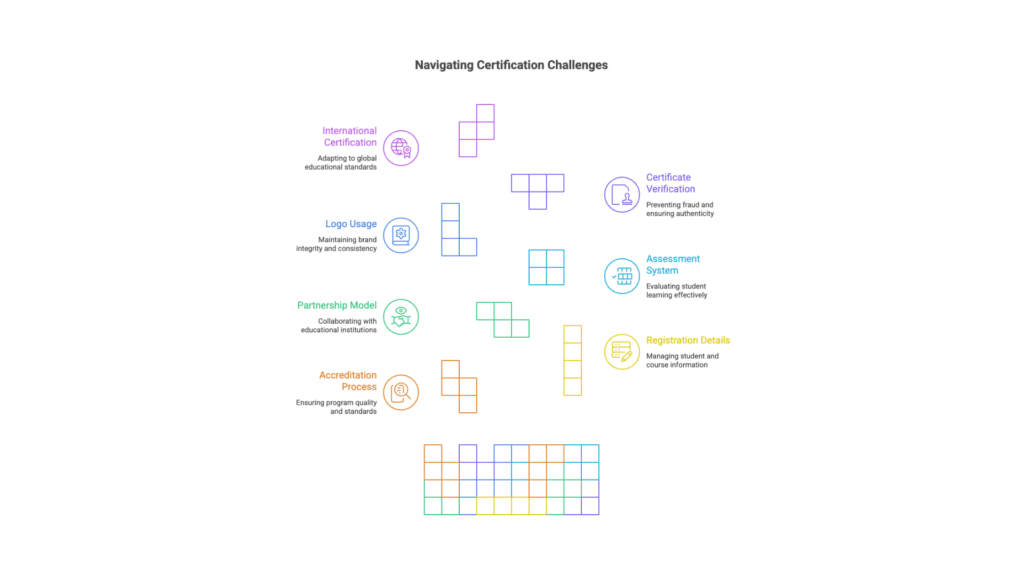
UKIQ also works with educational and training providers through its partnership model, supporting institutions in developing and delivering programmes and helping them strengthen their educational offerings.
This creates a relationship that goes beyond simply issuing a certificate. The objective is to create a framework through which academies, learners, and the qualification provider can work together to add greater value to education and skills development.
A Wider International Community
One of the important advantages of an international qualification framework is its ability to connect institutions and learners beyond a single geographical market.
UKIQ supports partners and students across a broad international community, allowing academies to become part of a wider network rather than operating entirely within their local education ecosystem.
With partnerships and connections extending across numerous countries, this international presence can be particularly valuable for institutions that want to build an identity that is not limited to their immediate geographical market.
For an academy, this can strengthen the way it communicates its vision to prospective students.
A student may not simply see the institution as a place to complete a course. They may see it as an institution connected to a wider international qualification ecosystem.
That distinction can influence perception, particularly among students who are interested in international education, overseas employment, further studies, or building a professional profile that can travel with them.
Building Trust Through Verifiable Qualifications
One of the most important elements of any qualification is credibility.
Students and employers increasingly want to know whether a certificate can be authenticated. A certificate that cannot be independently verified may create uncertainty, particularly when it is presented outside the institution that originally issued it.
UKIQ provides an online certificate verification facility through its website. Certificate holders can enter their certificate number into the verification system to check the relevant credential.
This creates an important layer of transparency.
Why Does Verification Matter?
Verification allows a qualification to have a digital point of reference beyond the physical certificate itself.
For students, this can provide additional confidence that their qualification has a verifiable record.
For academies, it can strengthen the credibility of the programmes they offer.
And for organisations reviewing a student’s qualification, an online verification facility can provide a practical way to confirm the authenticity of the credential.
In an education environment where credentials are increasingly shared digitally, this kind of verification can become particularly valuable.
The Certificate Becomes More Than a Piece of Paper
A certificate is often the final representation of a student’s learning journey.
But its value is influenced by several factors: the programme completed, the institution that delivered it, the qualification framework behind it, and the ability to establish its authenticity.
When an academy works with an international qualification provider, the certificate can carry an additional layer of identity associated with that qualification body.
UKIQ’s assessment registration information also states that UKIQ uses its own assessment systems and protocols for issuing certificates and describes itself as an autonomous organisation conducting assessment and certification for skill courses.
This distinction is important.
The objective is not merely to give students another document at the end of a course. It is to provide a credential that represents their participation and achievement within a defined qualification and assessment framework.
Strengthening Your Academy’s Reputation
Reputation is one of the most valuable assets an educational institution can build.
An academy may have excellent trainers, modern facilities, and strong course content, but prospective students may not immediately know this. They often rely on visible indicators of quality when evaluating an institution.
International accreditation can become one of those indicators.
When an academy can demonstrate an association with an international qualification provider, it gives students another reason to examine the institution more closely.
Over time, this can contribute to a stronger institutional identity.
The academy is no longer communicating only:
“We offer this course.”
It can communicate a broader message:
“We provide this course within an internationally oriented qualification framework.”
That difference may appear small, but it can have a meaningful effect on how an institution is perceived.
Helping Academies Stand Out in a Competitive Market
The education and training sector has become increasingly competitive.
In many fields, several institutions may offer similar courses with similar durations and comparable pricing. When course offerings become difficult to differentiate, institutions need to communicate additional value.
International accreditation can be one way of doing this.
An academy associated with UKIQ can highlight its connection with an international qualification provider as part of its institutional profile. UKIQ states that accredited providers can use the UKIQ logo on their websites and printed materials and that students can validate courses through its website.
This gives an academy tangible elements that can be communicated to prospective students.
The accreditation becomes part of the academy’s story.
Giving Students Greater Confidence in Their Choice
Enrollment is ultimately driven by people.
A student deciding between two academies wants to know that they are making the right choice. Parents may want reassurance about the quality of the institution. Working professionals may want a qualification that adds value to their existing profile.
International accreditation can contribute to that decision-making process by providing an additional level of assurance.
UKIQ highlights confidence and assurance around course practices, materials, educational activities, and standards as benefits for learners and students.
This does not mean that accreditation replaces the importance of teaching quality.
Instead, it complements it.
Good teaching creates the learning experience. A credible qualification framework helps provide structure and recognition around that experience.
Supporting Students Beyond the Classroom
Education is ultimately about preparing people for what comes next.
For many students, that means entering employment. For others, it may mean pursuing further education, changing careers, developing professional skills, or exploring opportunities in another country.
An internationally oriented qualification can become an additional component of a student’s professional profile.
UKIQ describes its qualifications and certification as being designed to help learners develop knowledge and skills and stand out in competitive employment and global business environments.
For academies, this creates an opportunity to position their programmes around outcomes rather than simply course completion.
The message becomes broader:
The academy is not only helping students learn. It is helping them build a qualification-backed professional profile.
International Accreditation and Enrollment: The Connection
So, how does all of this actually translate into enrollment?
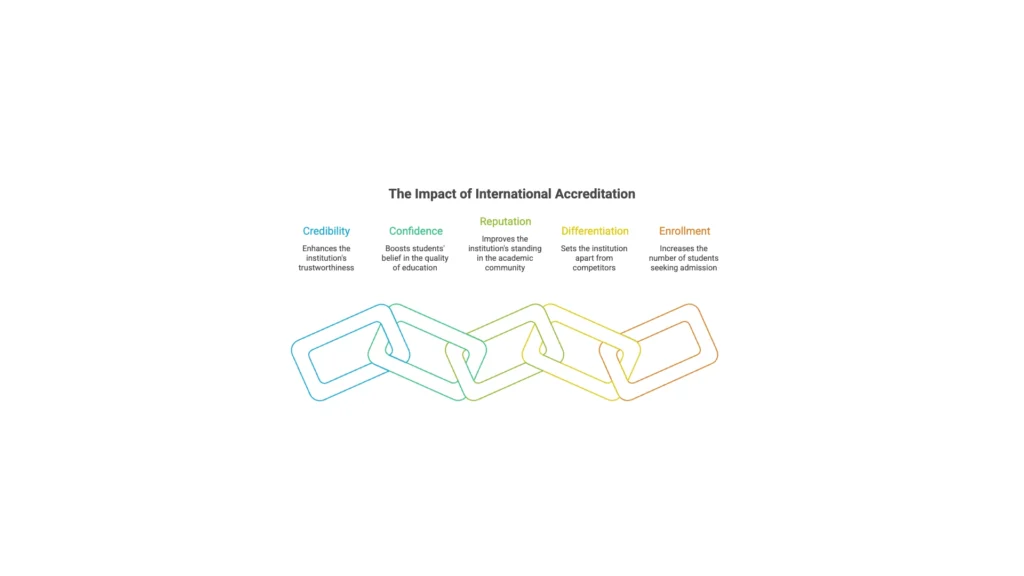
The connection can be understood through a simple chain:
International accreditation → greater perceived credibility → increased student confidence → stronger institutional reputation → greater differentiation → stronger enrollment potential.
Accreditation alone does not automatically guarantee that an academy will attract more students. Enrollment depends on many factors, including course quality, pricing, location, faculty, student experience, marketing, and career relevance.
However, accreditation can strengthen one of the most important factors in the decision-making process:trust.
When students trust the institution and understand the value of the qualification they are going to receive, they are more likely to consider that institution seriously.
An Advantage for Both the Academy and the Student
The relationship between an academy and an international qualification provider should not be viewed as beneficial to only one side.
The academy gains an opportunity to strengthen its institutional positioning.
The student gains access to a qualification associated with an international framework.
The academy can communicate additional credibility.
The student can present an additional credential.
The academy becomes part of a wider educational network.
The student becomes part of an international learner community.
This creates a shared value proposition where the success of the institution and the development of its students are closely connected.
More Than Accreditation: Building an International Identity
For an academy, the long-term value of international accreditation goes beyond the immediate enrollment cycle.
An institution that consistently provides internationally oriented qualifications can gradually build an identity around quality, credibility, and global exposure.
This can influence how students perceive the institution, how partners view it, and how the academy positions itself within an increasingly interconnected education sector.
International accreditation can therefore become part of a broader institutional strategy rather than simply an additional feature of a course.
It can help an academy communicate that it is preparing students not only for today’s opportunities, but also for a world where education and careers increasingly cross geographical boundaries.
Why Verification Adds Another Layer of Credibility
In an increasingly digital world, credibility needs to be demonstrable.
A physical certificate may show a student’s achievement, but the ability to verify that credential online adds another level of transparency.
UKIQ’s online verification system allows certificate numbers to be checked through its verification portal.
For academies, this means they can point students and other stakeholders toward an independent online verification process.
For students, it means their qualification can have a verifiable digital reference.
For employers or other organisations reviewing credentials, it provides a mechanism through which the certificate can be checked.
This is particularly relevant as professional profiles, applications, and academic documents increasingly move online.
A Stronger Proposition for Prospective Students
When an academy combines quality teaching, relevant programmes, experienced faculty, student support, and an internationally oriented qualification framework, it creates a stronger overall proposition for prospective learners.
Students are not simply looking for a place where they can attend classes.
They are looking for value.
They want to know:
- What will I learn?
- What qualification will I receive?
- Is the qualification verifiable?
- What does the qualification add to my profile?
- Can the institution provide credible academic support?
- Will this learning help me progress toward my future goals?
International accreditation can help an academy answer some of these questions with greater confidence.
The Bigger Picture: Turning Enrollment Into Long-Term Trust
Increasing enrollment should not be viewed simply as a marketing objective.
The most sustainable growth comes when students enroll because they genuinely believe that the institution can provide meaningful educational value.
International accreditation can contribute to this by strengthening the foundation on which that trust is built.
When students receive a qualification associated with an established international qualification provider, have access to verification, and study through an institution that is committed to quality and structured learning, the academy can create a more compelling educational experience.
That experience can lead to stronger student satisfaction, better word-of-mouth recommendations, and a more established institutional reputation over time.
Conclusion: International Accreditation as a Growth Opportunity
International accreditation is not a replacement for good education. It is a way of adding greater structure, credibility, and international dimension to the education an academy already provides.
For an academy, the benefits can extend across several areas—from institutional reputation and student confidence to differentiation and long-term positioning.
For students, it can provide an internationally oriented qualification, a verifiable credential, and an additional component to their academic and professional profile.
UK International Qualifications brings these elements together through its international qualification and partnership framework, supporting educational and training providers while creating opportunities for learners across different markets. UKIQ’s public information highlights its UK Register of Learning Providers registration, accreditation framework, international certification approach, partner support, and online verification facility.
Ultimately, the value of international accreditation can be summed up in one idea:
When students see greater credibility and value in the qualification they receive, they are more likely to see greater value in the institution that provides it.
And for an academy looking to grow in an increasingly competitive education market, that added value can become an important part of attracting, convincing, and retaining the next generation of learners.
Read More
Related Articles